
Mindpeak's AI in npj precision oncology

May 14, 2025

Mindpeak's in npj precsion oncology:  IHC foundation model helped pathologists identify >30% more gastric cancer patients to be eligible for IO therapies, while at the same time improving accuracy and concordance of readers

npj Precision Oncology study shows pathologists find >30% more patients eligible for treatment using AI based on PeakFoundation, Mindpeak GmbH’s IHC foundation model

We are pleased to announce that the results of a large-scale study on Gastric PD-L1 scoring involving our IHC foundation model and expert pathologists from leading institutions including Mayo Clinic, Emory University, John Hopkins University, MD Anderson Cancer Center, Memorial Sloan Kettering Cancer Center and other clinics have been published in npj Precision Oncology (via Springer Nature).

Gastric PD-L1 assessment is a critical task for immunotherapy decisions, but often prone to variability among pathologists. The effect of AI assistance in this challenging task was investigated by a group of experts in an augmented-reality setting, resulting in these keyfindings:

-AI assistance improves pathologists’ scoring accuracy performance, both as a group and individually

-AI assistance may lead to identifying a larger number of patients eligible for therapy

-Cell-level interpretation guidelines by expert pathologists to direct AI development are key

This study is an important step forward in our mission to provide personalised cancer treatment through AI tissue diagnostics and contribute to patient outcomes.Read the full paper here: https://lnkd.in/eKUukief
In the News

Related reading

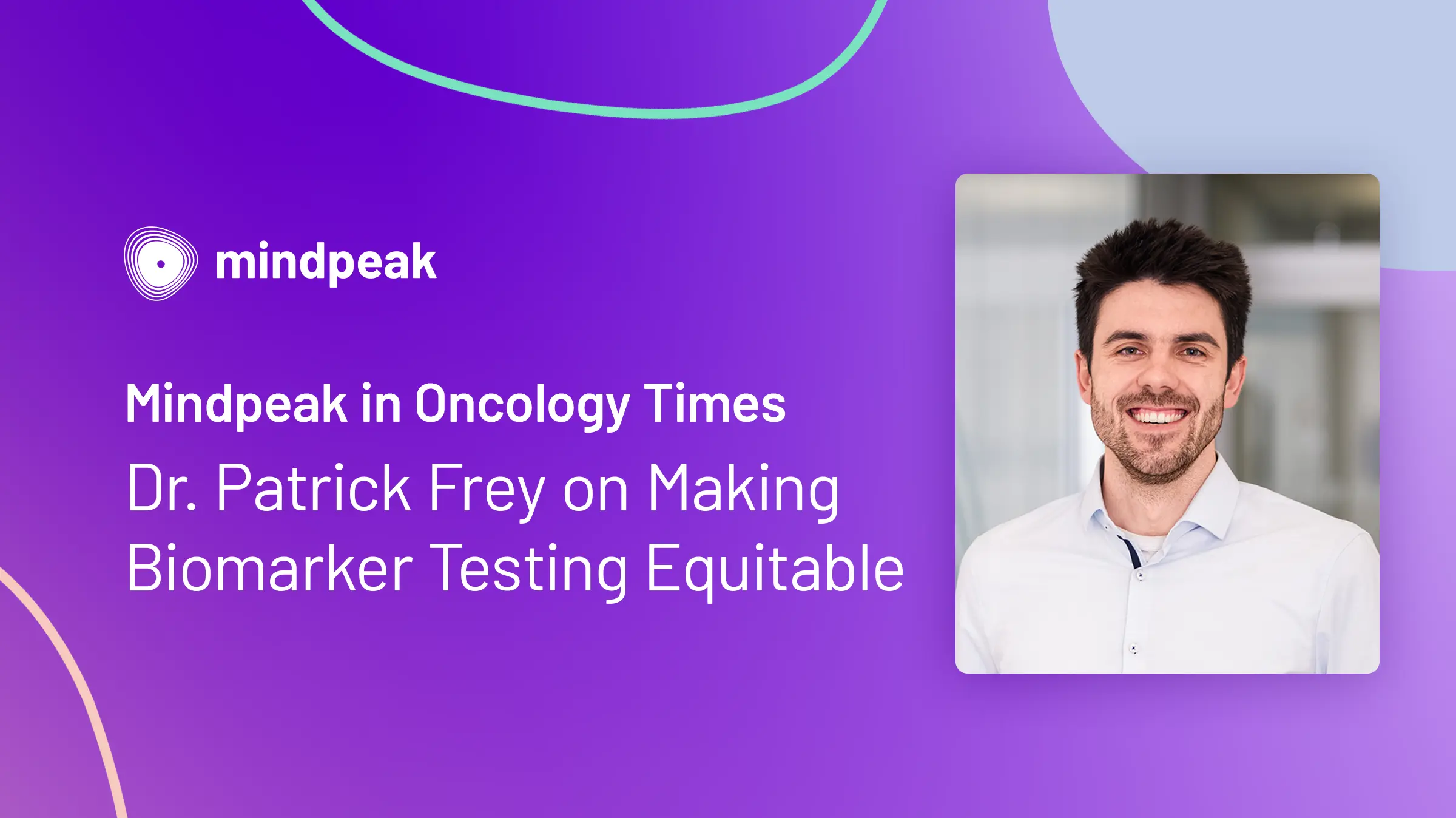
We’re proud to see our VP Precision Medicine, Patrick Frey, featured in Oncology Times sharing his perspective on one of oncology’s most urgent challenges – achieving true equity in biomarker testing.
In the News
8 min read

Mindpeak in Oncology Times

We’re proud to see our VP Precision Medicine, Patrick Frey, featured in Oncology Times sharing his perspective on one of oncology’s most urgent challenges – achieving true equity in biomarker testing.

We’re proud to see our VP Precision Medicine, Patrick Frey, featured in Oncology Times sharing his perspective on one of oncology’s most urgent challenges – achieving true equity in biomarker testing.

As Patrick notes, the conversation must move from if to how. The science and technology already exist; now it’s about ensuring every patient, everywhere, can access and benefit from them.

At Mindpeak, we believe AI-powered pathology can help close that gap – supporting faster, more consistent insights that make precision medicine truly accessible.

In the News
8 min read

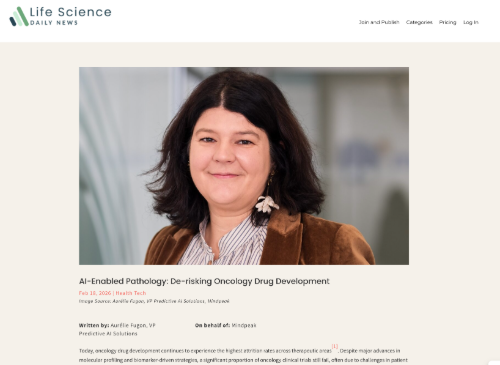
AI-Enabled Pathology: De-risking Oncology Drug Development

We are delighted to share that Aurélie Fugon, VP Predictive AI Solutions at Mindpeak, is featured in Life Science Daily News.

In her article, Aurélie outlines how AI-supported biomarker-driven strategies can reduce variability in pathology, improve the consistency of patient selection and help de-risk late-stage trials.

All key enablers of more reliable, data-rich clinical decision-making. With Aurélie’s leadership, we’re strengthening collaborations with pharma, biotech and clinical partners to help bring reproducible, scalable biomarker assessment into real-world research settings, shaping the future of predictive AI in precision oncology.

Read the full article here: https://lifesciencedaily.news/ai-enabled-pathology-de-risking-oncology-drug-development/

In the News
8 min read

United by Unique: Advancing Personalised Cancer Care on World Cancer Day

Every person with cancer is unique. So is every diagnosis - and every pathology sample that informs it.

This year’s World Cancer Day theme continues the focus on United by Unique, highlighting the importance of early detection, equitable access, and truly personalised care. It is a powerful reminder that behind every case is an individual with distinct biology, circumstances, and needs.

At Mindpeak, we believe precision medicine should be a right, not a privilege. Scientific and technological advances have transformed what is possible in cancer diagnostics. The challenge now is ensuring these innovations reach patients in ways that reflect their individuality.

Advanced AI models in digital pathology can help bridge this gap. By accelerating insights from complex tissue data and supporting clinicians with consistent, high-quality analysis, AI contributes to faster, more precise and more personalised decision-making.

On World Cancer Day, we stand with the global community in raising awareness and championing approaches that put people first. When we see the person before the disease, we move closer to a future where every individual’s uniqueness is recognized - and reflected - in their care.

Ready to advance your diagnostics

Connect with our team to explore how precision pathology works in your setting